
About Kermanshah - Razi University
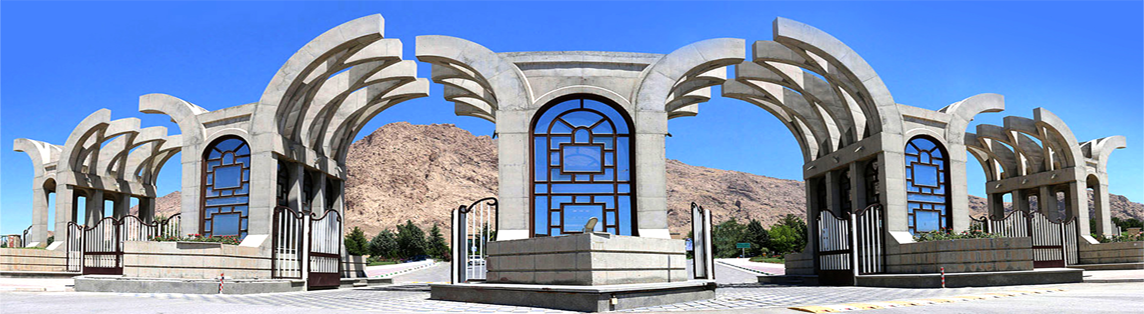
About Kermanshah
1. Location & Climate
Kermanshah is the capital of Kermanshah Province and one of the major urban centres of western Iran. Located in the Zagros Mountains, approximately 525 kilometres west of Tehran, the city is the largest urban centre in western Iran. According to the 2016 national census, Kermanshah had a population of 946,651, while its metropolitan area had more than one million inhabitants. The city stands at an elevation of approximately 1,350 metres above sea level and has historically served as an important cultural, commercial, and transportation centre in western Iran. Kermanshah lies in a broad intermontane valley of the Zagros mountain range and is associated with the Qarah Soo River. The surrounding mountains, including the Paraw range and the mountains around Taq-e Bostan, have played an important role in shaping the city's landscape and climate. Kermanshah Province borders Kurdistan Province to the north, Hamadan Province to the east, and Ilam and Lorestan provinces to the south. To the west, it shares an international border with Iraq. The region has a long history of linguistic and cultural diversity. Kurdish and Persian are widely spoken, with several Kurdish varieties represented in the province, including Kalhori, Sanjabi, Laki, Hawrami, and Jafi. Kermanshah is also home to communities representing different religious traditions and Islamic denominations. This diversity has contributed to the city's distinctive cultural character and its long history as a meeting place between different peoples and traditions. Because of its location in the Zagros Mountains, Kermanshah has a relatively moderate mountainous climate. Summers are generally warm and dry, while winters are cold and relatively wet. Snowfall is common during winter, particularly in the surrounding mountainous areas. The province's varied topography produces considerable climatic differences between its eastern, central, and western regions.2. Cultural and Historical Sites
Kermanshah and its surrounding province possess an exceptionally rich archaeological and historical heritage. The region contains evidence of human occupation dating back to the Paleolithic period and preserves important monuments from the Achaemenid, Parthian, Sasanian, Islamic, and Qajar periods. The geographical position of Kermanshah has contributed greatly to its historical significance. Located between the Iranian plateau and Mesopotamia, the region has long been connected to major routes linking the two areas. Several of its archaeological sites therefore provide evidence of cultural exchange between different civilizations and historical periods. Among the most important cultural and historical attractions are the following.Taq-e Bostan
Taq-e Bostan is one of the most famous historical monuments of Kermanshah and one of the finest surviving examples of Sasanian rock reliefs in Iran. The site is located approximately five kilometres from the city centre, at the foot of the Zagros Mountains. The monumental reliefs were carved primarily during the fourth century CE under the Sasanian Empire. The complex consists of several rock carvings and two principal iwans, or vaulted chambers, together with inscriptions and sculptural representations of Sasanian rulers and royal ceremonies. Among the most important reliefs are the investiture scenes associated with Ardashir II and Shapur III. The larger grotto contains elaborate representations of royal hunting scenes, including depictions of the king hunting wild boar and deer. Other imagery represents royal power, military authority, religious symbolism, courtly life, and the splendour of the Sasanian monarchy. The location of the monument beside natural springs and beneath the surrounding mountains adds to its visual and cultural significance. The springs feed a large pool in front of the reliefs, creating a landscape that combines natural and archaeological features. Taq-e Bostan is a nationally protected historical monument and one of the principal symbols of Kermanshah. Although it is internationally significant, it should not be described as a UNESCO World Heritage Site. Unlike Bisotun, Taq-e Bostan is not currently inscribed on the UNESCO World Heritage List.Bisotun (or Behistun)
Bisotun, also known as Behistun, is one of the most important archaeological areas in western Iran. Located approximately 30 kilometres east of Kermanshah, the site lies at the foot of Mount Bisotun, in a strategically important area that historically connected the Iranian plateau with Mesopotamia. The best-known monument at the site is the Behistun Inscription, commissioned by Darius the Great during the Achaemenid period. The inscription was written in three languages, Old Persian, Elamite, and Babylonian, and records Darius's accession to the throne and his suppression of a series of rebellions following the death of Cambyses II. The Behistun Inscription is of exceptional importance in the history of archaeology and the study of ancient languages. Its decipherment in the nineteenth century played a crucial role in enabling scholars to read Persian cuneiform and subsequently advance the decipherment of other cuneiform languages. The archaeological complex extends beyond the inscription itself. It contains monuments and remains from several historical periods, including the Statue of Hercules, Parthian rock reliefs, Farhad Tarash, the remains of the Sasanian bridge, a Safavid-period bridge, and historic caravanserais. The Bisotun archaeological site was inscribed on the UNESCO World Heritage List in 2006 in recognition of its outstanding cultural and historical significance. The historic Shah Abbasi Caravanserai, situated near Mount Bisotun, forms part of the broader historical landscape of the site. The caravanserai reflects the importance of the region as a route for travellers and merchants during the Safavid period.Tekyeh Moaven Al-Molk
Takyeh Moaven-ol-Molk is one of the most remarkable monuments of the Qajar period in Kermanshah. Built in the early twentieth century, the complex was originally established as a takyeh, a place used for Shi'a religious ceremonies and mourning rituals. The complex consists of three principal sections: the Hosseiniyeh, the Zeynabiyeh, and the Abbasiyeh. One of its most distinctive features is its extensive decorative tilework. The walls are covered with richly coloured tiles depicting religious narratives, historical figures, scenes associated with the Battle of Karbala, Iranian kings, characters from the Shahnameh, and various representations of Iranian cultural and historical heritage. The building is particularly notable for the combination of religious imagery with representations of Iran's pre-Islamic and Islamic past. This visual programme provides an important example of the ways in which historical memory and religious identity were represented in Qajar-era architecture. The complex now accommodates museums devoted to anthropology, traditional clothing, and jewellery. Visitors can learn about the traditional culture, dress, crafts, and everyday life of the people of Kermanshah and the surrounding region. Takyeh Moaven-ol-Molk was recognised as a National Heritage Site of Iran in 1975.Tekyeh Biglar Beigi
Takyeh Biglarbeigi is another important Qajar-period monument in the historic centre of Kermanshah. Built as a religious and ceremonial complex, it is particularly distinguished by its elaborate mirror work, known as ayeneh-kari, and its traditional Iranian architectural design. The building reflects the religious, social, and architectural culture of nineteenth-century Kermanshah. Its richly decorated interior and extensive use of mirrored surfaces make it one of the city's most distinctive historic buildings. The complex is associated with museums and cultural collections, including materials relating to calligraphy, manuscripts, and the history of Kermanshah. It provides visitors with an opportunity to explore both the architectural heritage and the literary and artistic traditions of the region.Zagros Paleolithic Museum
The Zagros Paleolithic Museum is a specialised archaeological museum in Kermanshah dedicated to the Paleolithic and Neolithic periods. The museum was established in 2007 and contains stone tools, animal fossil remains, archaeological materials, and reconstructions associated with prehistoric human activity in Iran. The museum consists of four galleries presenting archaeological evidence from different periods of the Stone Age. Its collections include stone tools from important prehistoric sites in Iran, animal remains from the Zagros region, and replicas of human remains and prehistoric figures. Particularly significant are materials associated with archaeological research in the Zagros Mountains, including finds from Wezmeh Cave. The museum provides an important introduction to the prehistoric archaeology of western Iran and the wider Near East. For students and researchers interested in archaeology, anthropology, human evolution, and the prehistory of the Zagros region, the museum offers valuable insight into the earliest phases of human settlement in Iran.Other Historical Attractions
Other Historical Attractions Kermanshah contains numerous other historical monuments and archaeological sites. Among them are the Jameh Mosque of Kermanshah, Emad-od-Dowleh Mosque, Kohneh Bridge, the Anubanini Rock Relief, Dokan-e Davud, the Essaqwand Rock Tombs, Ganj Dareh, Godin Tepe, Dinavar, and the historic sites around Sarpol-e Zahab. The province's archaeological landscape extends well beyond the city itself. Visitors interested in ancient Iranian history can explore sites representing different periods from prehistoric settlements to the Achaemenid, Parthian, Sasanian, and Islamic eras.3. Natural Attractions
Kermanshah's location in the Zagros Mountains has created a diverse natural landscape consisting of mountains, caves, springs, valleys, forests, rivers, and seasonal wetlands. These natural features, together with the province's archaeological heritage, make Kermanshah an attractive destination for visitors interested in ecotourism, hiking, outdoor activities, and adventure tourism.Kuhestan Park:
Kuhestan Park, meaning "Mountainous Park", is located in the northern part of Kermanshah near Taq-e Bostan. The park is situated on the lower slopes of the Zagros Mountains and provides views over the city and surrounding landscape. The area combines natural scenery with recreational facilities and is particularly popular among local residents and visitors. Its proximity to Taq-e Bostan makes it possible to combine a visit to one of Kermanshah's principal archaeological monuments with an excursion into the surrounding mountain landscape. The nearby Do-Ashkaft Cave is also of considerable archaeological importance. The cave and other prehistoric sites in the Kermanshah region provide evidence of human occupation during the Paleolithic period.Quri Qale Cave:
Quri Qala Cave is one of the most spectacular caves in western Iran. It is located near Ravansar in Kermanshah Province and is regarded as one of the longest caves in western Asia. The cave contains several chambers with impressive natural formations, including stalactites, stalagmites, calcite formations, underground waterfalls, and streams. Its geological features have developed over a very long period and create a remarkable underground environment. Quri Qala is also significant from a biological and archaeological perspective. It provides habitat for mouse-eared bats, while archaeological discoveries from the cave include objects associated with the Sasanian period, including silver vessels and coins. The cave has both a publicly accessible section and more technically demanding areas. The accessible sections can be visited by ordinary tourists, while exploration of the more difficult passages requires specialist caving equipment and experience.Paraw Cave:
Paraw Cave is located in the Paraw mountain range northeast of Kermanshah, between the Taq-e Bostan and Bisotun areas. The cave is internationally known among speleologists and mountaineers for its difficult vertical passages and demanding conditions. The cave lies at a high elevation in the Zagros Mountains and contains numerous shafts and vertical sections. Its exploration requires considerable technical skill, particularly because of the depth, cold conditions, water, and challenging underground passages. Paraw Cave has consequently become an important destination for experienced cavers and adventure tourists. It is better understood as a specialised mountaineering and speleological destination rather than an ordinary tourist attraction. The surrounding Paraw mountain range is also important for hiking and mountaineering, offering extensive views across the Kermanshah plain and the Zagros landscape.Sarab-e Niloofar:
Sarab-e Nilufar is a natural spring and wetland area near Kermanshah. The name means "Lotus Spring", reflecting the aquatic vegetation associated with the site. The area is particularly attractive during the warmer months, when aquatic plants and flowers contribute to its scenic character. The spring and its surrounding landscape have long been used as a recreational destination by residents of Kermanshah. Sarab-e Nilufar is part of the natural heritage of the region and represents one of the characteristic wetland environments found around the Kermanshah plain.Flower Garden:
The Kermanshah Flower Garden is a landscaped botanical and recreational space designed around a variety of horticultural traditions. Its sections draw inspiration from Persian, Japanese, French, and Italian garden styles. The garden contains a wide variety of plants and flowers and includes ponds, seasonal flower beds, ornamental shrubs, cactus collections, and other landscaped areas. It provides an accessible recreational environment for families, students, and visitors who wish to experience the city's horticultural attractions. The garden is particularly attractive during spring, when seasonal flowers are in bloom and the surrounding Zagros landscape is at its most verdant.The Zagros Mountains:
The Zagros Mountains form the geographical and ecological framework of Kermanshah Province. Extending across western Iran and into Iraq, the mountain range has played a fundamental role in the history, settlement patterns, agriculture, culture, and economy of the region. The Zagros landscape around Kermanshah contains numerous valleys, caves, springs, forests, and mountain peaks. It also provides opportunities for hiking, mountaineering, rock climbing, caving, and nature tourism. For visitors interested in combining cultural tourism with outdoor activities, the Zagros region around Kermanshah offers an unusual opportunity to experience archaeological heritage and mountain landscapes within a relatively compact geographical area.4. Cuisine and Shopping
Cuisine:
Kermanshah has a distinctive culinary tradition influenced by Persian and Kurdish food cultures. Local cuisine makes extensive use of meat, rice, herbs, vegetables, grains, and locally produced dairy and animal products. Among the best-known dishes and foods associated with Kermanshah are Dandeh Kebab, Khoresht-e Khalal, and Tarkhineh.Traditional Sweets and Local Products:
Kermanshah is one of the ancient cities in Iran with many famous souvenirs such as traditional cookies (e.g., Kaak, Naan Berenji, Naan Khormaei, Naan Roqani, and Beji), Kermanshahi Animal Oil, and different varieties of handicrafts (Gelim, Jajim, Giveh, and Namad).Shopping:
Kermanshah Grand Bazaar is one of the city's most important traditional commercial areas. It is also known as Tarikeh Bazaar or Tarikeh Bazaar and dates largely to the Qajar period. The bazaar developed as an important centre of trade in Kermanshah and historically served merchants, craftsmen, and local residents. Its traditional shops offer a wide range of products, including local foods, sweets, textiles, clothing, handicrafts, leather goods, jewellery, and other traditional products. The bazaar is more than a shopping destination. It forms an important part of the historical urban fabric of Kermanshah and provides visitors with an opportunity to experience the commercial and social traditions of the historic city.In addition to its traditional bazaar, Kermanshah has several modern shopping centres and commercial complexes. Among the city's better-known contemporary shopping destinations are Arg Shopping Centre, Lilium, Pardis, and other commercial complexes located in different parts of the city. These centres offer clothing, electronics, household goods, cosmetics, restaurants, cafés, and other modern retail services.